

Temp Email for Concert Presale Codes: Which Codes Land, and the One Presale It Can't Touch
Every major tour now sells out in minutes, and the presale code has become a small currency. Fans do the same ritual for every big announcement: sign up for the venue newsletter, the artist's email list, the local radio station's list, the credit card presale list — four or five email signups to catch a single code. Each signup feels free. Each one is a trade: a code today for a marketing list subscription that never ends.
The question I get constantly is some version of "can I just use a temp email for all of this?" And the honest answer is the most annoying kind: it depends entirely on which presale you're talking about, because "presale" is not one thing. It's three different machines that happen to share a name — and a temp email is perfect for one of them, useless for another, and actively dangerous for the third.
"Presale" is three different machines
Before anything else, sort your presale into its machine. Everything downstream — including whether a disposable address helps — follows from this.
Machine one: the code presale.
A generic code is emailed to everyone on a list — the venue's newsletter, a radio station's email club, the artist's mailing list. You type the code into an Unlock field on the event page and the locked tickets open up. The code is usually the same for every subscriber in a market. Nothing about your account matters; the code is the whole credential.
Machine two: the account-gated presale.
Ticketmaster's Verified Fan is the big one. You register ahead of time, Ticketmaster decides who gets in, and when the sale opens your account is recognized in the queue — there is no code at all. Ticketmaster's own presale guide says it plainly: for presales where signup is required ahead of time, no codes are distributed; when you join the queue, your account is automatically recognized. The email's job here is delivery, not access: registration confirmations, verification status, sale-day reminders.
Machine three: the fan-club presale.
Paid memberships — the artist's official fan club, a venue membership, a subscription tier — where early ticket access is a benefit of belonging. Here the email address is the membership: it holds your login, your renewal, your early-entry credentials.
A temp email shines in machine one, does nothing in machine two, and quietly destroys machine three. Most bad advice about presales and temp mail comes from people who never made this split.
The codes a temp inbox catches cleanly
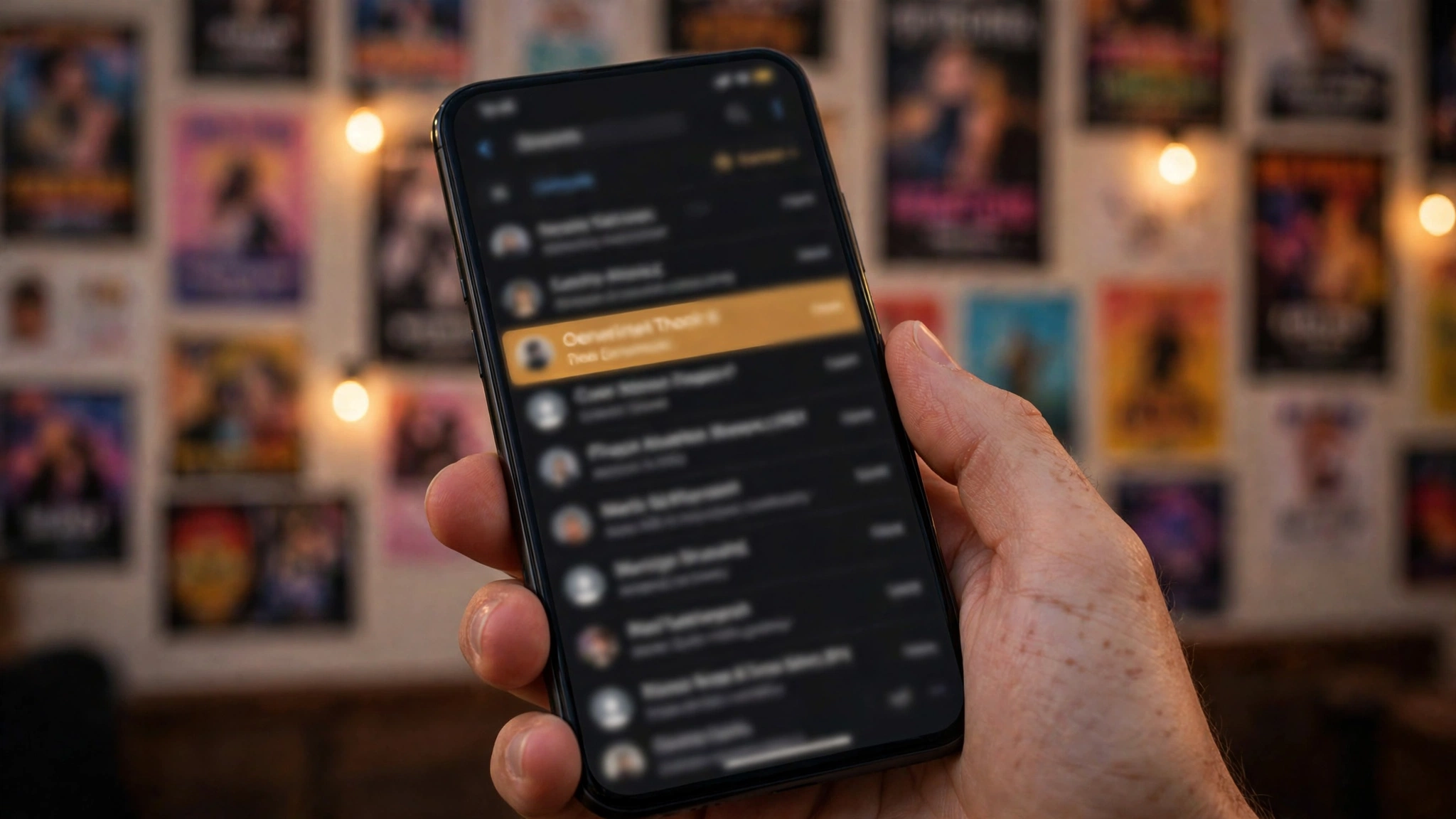
Code presales are the natural habitat of the disposable address. The mechanics are simple: a newsletter signup, a blast email with the code, and a code field on the ticket page. No account, no identity check, no ongoing relationship required.
The usual suspects: venue newsletters (the Live Nation and AEG venue lists in your city), radio station presale clubs — Ticketmaster's own guide still lists "good ol' fashioned radio" as a presale source, telling fans to follow their station and check its site for signup details — and artist mailing lists that blast codes to subscribers. These codes are deliberately shareable; fan ticket guides note they're typically generic per venue or market rather than unique per person (one widely cited example: the venue-specific code NYCFIVEFEET for Sabrina Carpenter's Short & Sweet tour — fan-reported, but representative of how these work).
This is the one email signup in the entire ticketing world where you owe the sender nothing afterward. The blast arrives, you copy the code, and the relationship can end right there. A disposable address is not a hack here; it's the correct tool. One address per tour is the system I recommend — the presale hunt for the spring stadium run lives on one address, the fall arena tour on another. When the tour is over, the address retires, and with it dies the entire marketing tail: the venue's "more shows like this" emails, the radio station's contest blasts, the artist's merch drops. It's the same compartment logic as using temp mail for flight deal alerts — pure notifications, no account, nothing to maintain — and it works for exactly the same reason: alerts that are pure notifications love disposable addresses.
One caution inside the good news: signing up for a dozen newsletters in a code hunt is the vendor-inquiry problem wearing a different costume. Every one of those lists keeps emailing long after the presale ends, and some sell or share their lists — the same spam avalanche wedding planners trigger with vendor inquiries. The temp address doesn't just catch the code; it's the thing that lets you walk away clean.
The machine where a temp email fails: Verified Fan, honestly explained
Now the other end. If your plan is to use a temp email for Ticketmaster's Verified Fan, understand what you're actually signing up for — because the email address is nearly the least important part of it.
Verified Fan works like this: you register in advance for a high-demand event, Ticketmaster verifies registrants, and selected fans get access when the sale opens. There is no code to catch. The access lives on your Ticketmaster account — purchase history, account age, and Ticketmaster's own anti-bot scoring decide who gets through. Fan ticket guides report that verification-status emails typically land the night before the sale, in waves between roughly 5 and 11pm ET, and that selection is brutal: fan polls put verification rates under 5% for the biggest Eras Tour dates and around 30% for merely very popular tours. Treat those as fan-reported figures, not official stats — Ticketmaster doesn't publish selection rates — but the shape of it is right: most people who register don't get in, and the email address has nothing to do with why.
Then there's the verification wall. Ticketmaster now asks you to verify your email and your phone number by delivering a one-time code directly to each — their help page phrases it as fighting "malicious technology," which is ticketing-industry code for bots. And here's the part that kills the temp-mail-adjacent playbook: Ticketmaster explicitly does not accept Google Voice or other VoIP numbers for phone verification. So the funnel is: a temp email can receive the registration confirmation, sure — but it buys you zero advantage in selection, and the phone number (which must be a real carrier number) is the actual gate. You're optimizing the part of the machine that doesn't matter.
Could a temp email actively hurt? Marginally, yes. Verified Fan selection weighs account history — an account created yesterday on a disposable domain with no purchase history is exactly the profile anti-bot systems are tuned to distrust. Nobody at Ticketmaster has published "disposable email = lower score," so I won't claim that as fact. What I will claim is the mechanism: the system rewards established, normal-looking accounts, and a burner address on a fresh account is the opposite of that.
The honest verdict for machine two: use your real address and your real phone number. Temp mail doesn't help, and the ten minutes you spend gaming the email field would be better spent making sure your account details are current before registration opens.
The fan-club middle ground
Fan-club presales sit between the two machines, and they're where temp mail does its quietest damage. These are paid memberships — the artist's official club, a venue's membership program — where presale access is a benefit you bought. The email address holds the membership: your login, your renewal notices, your presale entry credentials, sometimes the QR code that gets you early entry to the venue.
Use a temp address here and everything works right up until it doesn't. The membership is active, the presale window opens, and the login link goes to an inbox that expired in March. Password resets, membership renewals, the "your presale starts in one hour" email — all of it routes through the address you no longer own. Unlike a code blast, where the email's job ends the moment you copy the code, a fan-club membership needs its address alive for the entire membership year.
The rule: the address on a paid membership should be one you'll still own when the membership renews. A dedicated permanent address for fan clubs is fine — it's the memberships that are the commitment, not the inbox — but it has to be permanent.
The trap after the win: your tickets live in your email
Here's the scenario nobody plans for. You caught the code with a temp address, got through the queue, and bought the tickets. Victory — except the purchase created a Ticketmaster (or AXS, or venue) account on a disposable address, and now the tickets live behind it.
What actually depends on that address after purchase: the order confirmation (your proof of purchase), mobile ticket transfer invitations (transferring tickets to friends happens through the account, and the invitations and acceptances route through email), resale listing verification if you list tickets you can't use, refund and event-change notifications (postponements, venue changes, and the refund windows attached to them), and account recovery itself. This is the same money-layer lesson as buying on eBay with temp mail: the moment money and reputation attach to an account, the email stops being disposable. A concert ticket is a bearer instrument with your name on it — lose the inbox and you lose the paper trail.
If you already bought tickets on a temp address, rescue the account the same way you'd rescue any account: log in now while the session is fresh, swap the account email for a permanent address in settings, and turn on two-factor authentication with your real phone number. Do it before the inbox dies, not after — re-verification to a dead address is the trap.
And one more thing people forget: buying tickets means the ticket company's marketing machine now has whatever address you gave it. The "more shows like this" emails, the dynamic-pricing alerts, the merch store promos — all of it. The code-hunting temp address did its job at the code stage; the purchase belongs on a real address from the start.
The honest playbook: which inbox for which presale
Here it is as decision rules, no hedging:
1. Code blasts (venue newsletters, radio clubs, artist lists) → temp address, one per tour. This is the best use case in ticketing. Copy the code, retire the address when the tour ends.
2. Verified Fan → your real address and real phone number. Temp mail adds nothing and a fresh burner account is the wrong look for an anti-bot system.
3. Fan-club memberships → a permanent address. The membership year is the commitment; the inbox must outlive it.
4. The purchase itself → always a real address. Order confirmations, transfers, resale, refunds, and recovery all assume a reachable inbox. No exceptions.
5. Radio-station giveaway entries → temp address. Presale code giveaways are contests, and contests are exactly what disposable addresses are for — enter everything, keep only what counts.
Notice the pattern underneath: temp mail is for relationships you're willing to end. A code blast ends the moment you copy the code. A ticket purchase doesn't end until you're home from the show — and sometimes not even then, when refunds and transfers are still in play.
FAQ
Can I use a temp email to register for Ticketmaster Verified Fan?
The email field will accept it — the confirmation will even arrive. But it gains you nothing: Verified Fan access is tied to your account, not your email, selection weighs account history and anti-bot signals, and phone verification (real carrier number required, no VoIP) is the actual gate. Use your real address.
Do presale codes arrive by email or text?
Both, depending on the machine. Generic code presales arrive by email blast to newsletter subscribers. Verified Fan status arrives by email the night before the sale, with access codes delivered by SMS to your verified phone number. Fan-club presales usually arrive by email to the membership address.
Will a venue newsletter accept a disposable address?
Usually, yes. Newsletter signups rarely run disposable-domain blocklists — they want subscribers, and the signup form is the top of their marketing funnel. If one does reject it, that's the venue telling you it guards its list; use a dedicated permanent address for that venue rather than your primary.
Can I enter presale code giveaways with a temp email?
Yes — radio station and sponsor giveaways are contests, and contests are a textbook temp-mail use case. Enter with the disposable address; if you win, give the sponsor a real address for prize fulfillment, because prize emails, tax forms, and ticket transfers need a reachable inbox.
What happens to my tickets if the temp inbox I bought them with dies?
The tickets stay on the account, but everything around them degrades: transfer invitations, resale verification emails, postponement and refund notices, and password recovery all route through the dead address. Rescue the account before the inbox dies — swap in a permanent email while you're still logged in.
Is using temp mail for presales against the rules?
Reading a blast email with a disposable address breaks no rule anywhere — it's an ordinary privacy practice. What's against the rules is gaming the system: creating multiple Ticketmaster accounts to multiply Verified Fan entries violates their terms and risks getting every account banned. One person, one real account, temp mail only for the code hunts.
The presale economy runs on email, and now you know which parts of it a disposable address can touch. Code blasts: temp mail is the perfect tool — catch the code, skip the lifetime of marketing. Verified Fan: the email was never the lever; your account and your phone number are. Fan clubs and purchases: the relationship outlives the code, so the inbox has to outlive the relationship. Sort the presale into its machine first, pick the inbox second, and you'll never lose tickets to an address that expired in March.
Need a disposable temporary email?
Protect your real inbox from spam and promotional clutter instantly and free.
Received a suspicious email, text, or charge alert?
Verify whether the sender domain is disposable, spoofed, or unverified before clicking links.