

Temp Email for Sweepstakes and Giveaways: Enter Everything, Claim Only What Counts
The real price of a free entry: your inbox becomes the product
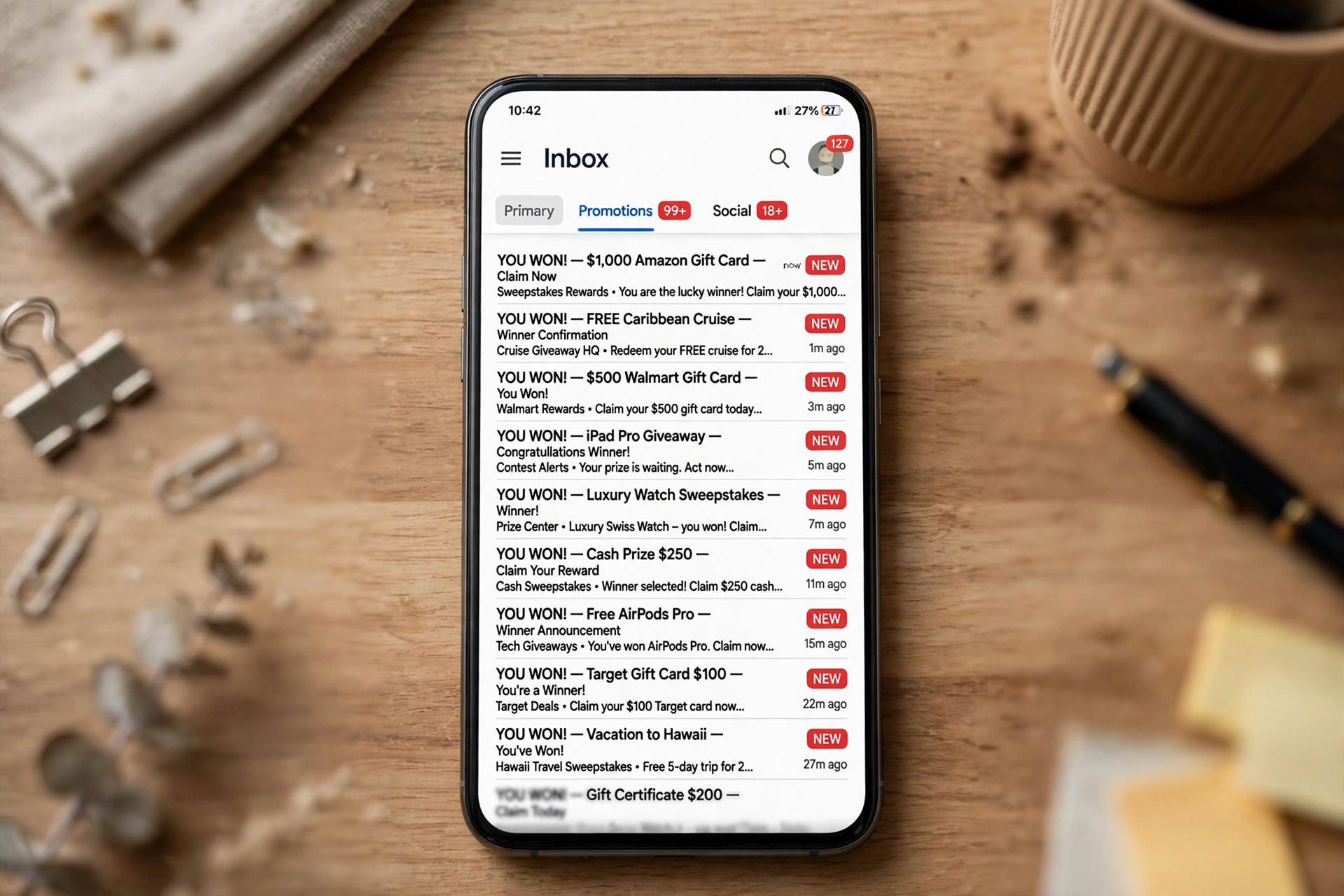
Start with what the contest organizer is actually buying. Running a sweepstakes costs real money — the prize, the legal compliance, the platform fees. Nobody pays that out of generosity. They pay it because a verified, engaged email address with confirmed demographics is worth somewhere between a few cents and several dollars on the list-rental market, and a sweepstakes collects thousands of them in a weekend.
What happens next is the part nobody reads in the official rules. Your address gets sorted into segments and sold or shared with "marketing partners," and the trickle starts: the vitamin brand, the insurance-quote aggregator, the extended-warranty robocall farm. We've covered this pattern in our guide to retail coupon signups, and sweepstakes are the same game with bigger bait. One entry on a Tuesday can mean six months of "CONGRATULATIONS, you've been selected" emails that are, themselves, more marketing funnels.
This is exactly the job a temp email was built for. You get the confirmation code, the entry is registered, and the marketing avalanche lands in an inbox you will delete on Friday. Nothing touches your real address. The sweepstakes organizer still got a working email — nobody is defrauded — but your attention is no longer theirs to resell.
The catch nobody mentions: an expired inbox can eat a real win
Here is the honest part, and it's the reason this post exists instead of just saying "use temp mail, done." Most sweepstakes official rules give winners a limited window to respond — commonly somewhere between a week and a month — before the prize rolls to an alternate. That window exists to keep the promotion moving. Now compare that against a disposable inbox that expires in ten minutes, an hour, or at most a few days.
See the mismatch? The email that matters most is the one that arrives months after you forgot the contest existed. If your entry address is a dead inbox by then, the "YOU WON" notification bounces into nothing, the deadline passes, and the prize goes to someone whose email still works. You entered correctly and lost on logistics.
This is not a hypothetical edge case; it's the central design tension of using temp mail for contests. There are two ways to handle it, and the honest answer is that you need both:
- Enter casual sweepstakes with a disposable address and accept the trade. Most contests have odds somewhere between terrible and comical, and the prize is a $25 gift card. The expected value of that entry is a fraction of a cent. A disposable address that costs you nothing and protects your real inbox is the right call. If lightning strikes and the win notification dies with the inbox, you have lost almost nothing.
- Use a persistent inbox for anything with a real prize and a real organizer. If the sweepstakes is run by a company you recognize, the prize is four figures or more, and the official rules look legitimate, don't gamble on a ten-minute address. Use a dedicated secondary email you actually check — or a temp-mail service with longer-lived custom inboxes — and set a calendar reminder for the drawing date. This is also the category where tax paperwork matters: in the US, sweepstakes winnings above $600 generally trigger a 1099 form, which means the organizer needs your real identity anyway.
The line between the two is simple: if the prize is worth a phone call from a stranger, the inbox needs to survive until that call.
One address per contest category is the whole strategy
People overcomplicate sweepstakes entries. The system that actually works is boring, which is why nobody sells it:
Give every contest category its own lane. Use one disposable address for social-media giveaways, another for retail sweepstakes, a third for the sketchy-looking popups you're entering anyway. When the spam starts, you know exactly which category sold you out, and you can burn that address without affecting the others. It's the same segmentation logic we recommended for dating apps — compartments limit blast radius.
Never reuse the address that won something. If a disposable address ever receives a legitimate win notification, treat it like a burned alias. Contest organizers share winner lists with "fulfillment partners," and that address is now tagged as belonging to a responsive human. Retire it and start fresh.
Read the "partners" checkbox before you click submit. This is the single most valuable ten seconds in any entry form. Unchecking the pre-ticked marketing-consent boxes doesn't reduce your odds — entry and marketing consent are legally separate in most jurisdictions — but it dramatically reduces the spam load on even a disposable inbox, which keeps the inbox usable for the confirmations you actually want.
Screenshot your entry confirmations. If a confirmation page gives you an entry ID or reference number, save it somewhere outside the disposable inbox. When the inbox expires, that screenshot is your only proof you entered, and it lets you follow up through the organizer's contact form if a win notification goes missing.
Where temp mail gets your entry quietly deleted
Not every contest platform is neutral about disposable addresses. The big entry-management tools — Gleam, Rafflecopter, KingSumo, and the sweepstakes widgets built into major retailers' sites — run the same kind of domain blocklists as everyone else. We explained the machinery in our guide to why websites reject temp email: disposable domains get flagged, and entries from flagged domains can be silently discarded or disqualified without any error message.
The practical advice: if a contest's confirmation email doesn't arrive within a few minutes, don't just assume it's slow. Try the entry once more with a different disposable domain, and if it still doesn't land, that platform is blocking temp mail. For high-value contests you genuinely care about, this is your signal to switch to a real secondary address rather than fighting the filter. An entry that never registers has worse odds than no entry at all, because you spent the time and got nothing.
One more trap specific to contests: some sweepstakes require email verification and a social-media action from an account tied to the same address. If your Instagram or X account is registered to your real email but your entry uses a disposable one, mismatched identities can flag the entry during winner verification. Keep the identities consistent for any contest you'd actually want to win.
Reading a "you've won" email like someone who has seen the scam
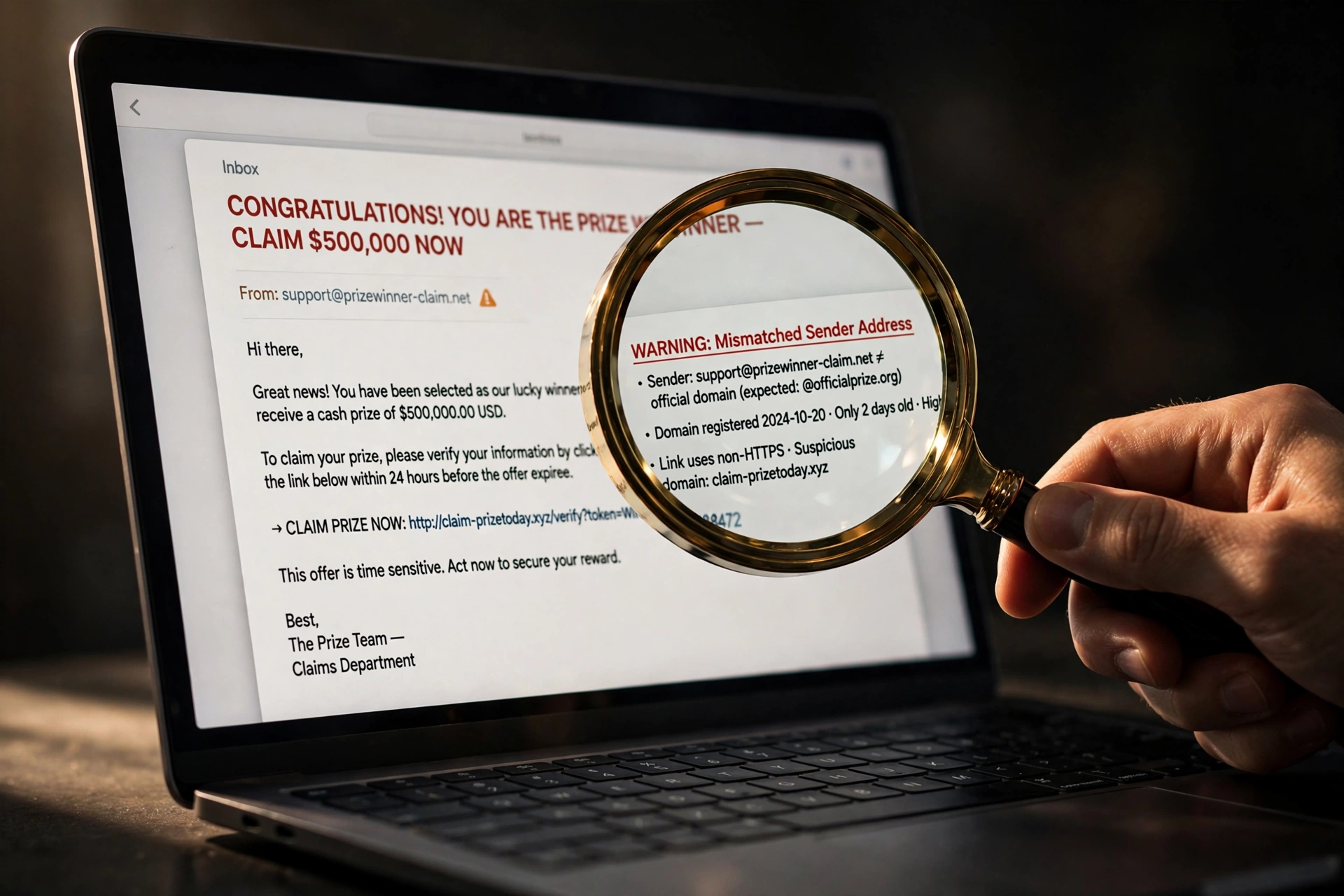
Roughly half the "YOU WON" emails a heavy sweepstakes entrant receives are not wins at all. The giveaway ecosystem is also a hunting ground for advance-fee fraud: fake prize notifications that need you to pay "processing fees," "customs charges," or "taxes" before the prize ships — usually via wire transfer or gift cards. Real sweepstakes never ask winners to pay to receive a prize. That sentence is worth memorizing, because it filters out nearly every scam on contact.
Check these before you celebrate:
- The sender. A real win notification comes from the organizer's domain or their named fulfillment company — not a free webmail address, and not a lookalike domain with a hyphen or extra letter. Open the full headers if you're unsure; the "from" name is free to lie, the sending domain is harder to fake convincingly.
- What they ask for. Tax forms and a mailing address are normal for large prizes. Payment of any kind — fees, deposits, gift cards — is not. Neither is your bank login, your full Social Security number by email, or remote access to your computer "to process the transfer."
- The urgency. "Claim within 24 hours or forfeit" is a pressure tactic, not a policy. Legitimate rules state the claim window in the official rules you can look up; scammers invent a countdown to stop you thinking.
- Whether you entered. This sounds obvious, but it catches people constantly: if you can't find the entry confirmation or don't remember the contest, treat the win as guilty until proven innocent. Search your memory and your screenshots before you click anything.
There's a related risk worth naming: if you used a public, no-password disposable inbox for entries, anyone who guesses the address can read your win notifications too. We dug into the public-inbox problem in detail — the short version is to use private, unguessable addresses for anything involving prizes, and never a shared public inbox where "winner" emails are visible to strangers.
When the honest move is your real email
Temp mail is a tool, not a religion, and sweepstakes have a clear boundary where the tool stops being appropriate. Use your real, permanent email when:
- The prize is large and the organizer is legitimate. Major-brand sweepstakes verify winners, sometimes including identity documents and tax forms. A disposable address at this stage looks evasive and can get you disqualified under "suspicious entry" clauses that appear in nearly every set of official rules.
- The contest requires ongoing contact. Skill-based contests, tournaments, and multi-round giveaways need back-and-forth communication. You cannot do rounds of correspondence from an inbox that expires.
- You've already won once on that organizer's list. Past winners are often pre-verified; switching to a disposable address for the next contest just re-triggers every fraud check.
None of this argues against temp mail for the other ninety percent of contests — the Instagram comment giveaways, the blog raffles, the "win a gift card" popups. It argues for matching the inbox to the stakes, which is the entire philosophy of disposable email done right.
FAQ
Do sweepstakes entries with temp email actually count?
Usually yes, as long as the confirmation email arrives. The entry is registered when you confirm; the organizer has no reliable way to know the address is disposable unless their platform runs a domain blocklist. If the confirmation never arrives, the entry didn't count — try a different domain or a real address.
Can I get disqualified for using a disposable email?
Official rules almost always prohibit multiple entries per person and sometimes require a "valid" email, but enforcement focuses on duplicate winners and fraud patterns, not the email provider. The realistic risk is technical — blocklists silently dropping your entry — not legal.
What happens if I win and my temp inbox expired?
The notification bounces, the claim window passes, and the prize goes to an alternate winner. There is no appeals process for an inbox you let die. This is why matching inbox lifespan to prize value is the core skill of sweepstakes entries.
Are "you've won" emails asking for a fee always scams?
Yes. Legitimate sweepstakes deduct any required taxes from the prize or handle them via tax forms; they never ask winners to wire money, buy gift cards, or pay "release fees" upfront. Any fee request is the single clearest scam marker in the category.
Should I use the same temp address for every contest?
No — segment by category. One address per contest type means you can identify which entry source sold your data and burn that address without collateral damage. It's a few seconds of extra work per entry for a large reduction in spam.
Do I owe taxes on sweepstakes winnings?
In the US, prize winnings are generally taxable income, and organizers typically issue a 1099 form for prizes above $600. This is another reason large-prize contests deserve a real, permanent email: the paperwork has to reach a human.
Need a disposable temporary email?
Protect your real inbox from spam and promotional clutter instantly and free.
Received a suspicious email, text, or charge alert?
Verify whether the sender domain is disposable, spoofed, or unverified before clicking links.