

Temp Mail for eBay: The Signup Works — Everything After It Needs Your Real Inbox
eBay is the marketplace where temp mail passes the entrance exam and fails every subject that follows. Registration takes a name, an email, and a password. Paste a disposable address, click the confirmation link, and you're in — the verification email lands in a temp inbox in seconds, and eBay's front door swings open like it was never locked.
That easy entry is exactly what makes eBay a bad candidate for a disposable email. The signup is the one moment on eBay where your email address does almost nothing. Everything after it — the order confirmations, the shipping notices, the dispute deadlines, the payout paperwork — is built on the assumption that you still own that inbox months later. And on the seller side, the email isn't even the hard part: eBay's managed payments system wants your identity, your bank account, and your tax ID. A burner email next to that stack of requirements is a rounding error.
I've read the existing guides on this question. The honest answer to "can you create an eBay account using temporary email" is yes, and the guides stop there — a yes that answers nothing. What you actually want to know is whether the account survives contact with eBay's real machinery: buying, disputing, selling, getting paid. So here is the split reality, tracked the way the money moves.
Track one: the buyer — where the email matters least at signup and most afterward
Let's start with the part that surprises people: for a one-off purchase, temp mail isn't just unnecessary — it's the wrong tool for a job eBay already solved. eBay offers guest checkout on a huge share of Buy It Now listings. No account, no email beyond the one you type in for the receipt, no password to remember. If your actual goal was "buy this one thing without handing over my address," the answer was never a disposable inbox. It was the guest checkout button, sitting one click away the whole time.
Bidding is different — auctions and Best Offer purchases need an account. That's the moment temp mail enters the picture, and it's the moment its usefulness starts decaying. Here's why: an eBay buyer account is a reputation instrument. Your feedback score is public, attached to every bid you place and every offer you make. Sellers routinely refuse bids from zero-feedback accounts on expensive items, and eBay's own systems treat fresh accounts with suspicion in ways that have nothing to do with your email address. A temp-mail account starts at zero feedback and — because the inbox dies on its own schedule — tends to stay fragile forever.
Now the part nobody's template guide mentions: your eBay inbox is your legal paper trail. Every purchase generates order confirmations, payment receipts, shipping notifications, and delivery updates, and all of them go to email. When a package doesn't arrive or arrives wrong, eBay's Money Back Guarantee runs through the Resolution Center, where cases have deadlines and eBay communicates status updates to — you guessed it — your email. Lose the inbox and you lose your evidence locker. I've watched buyers lose disputes they should have won because the seller's message, the shipping update, and eBay's case reminder all went to an address that expired in July.
The inbox is the paper trail
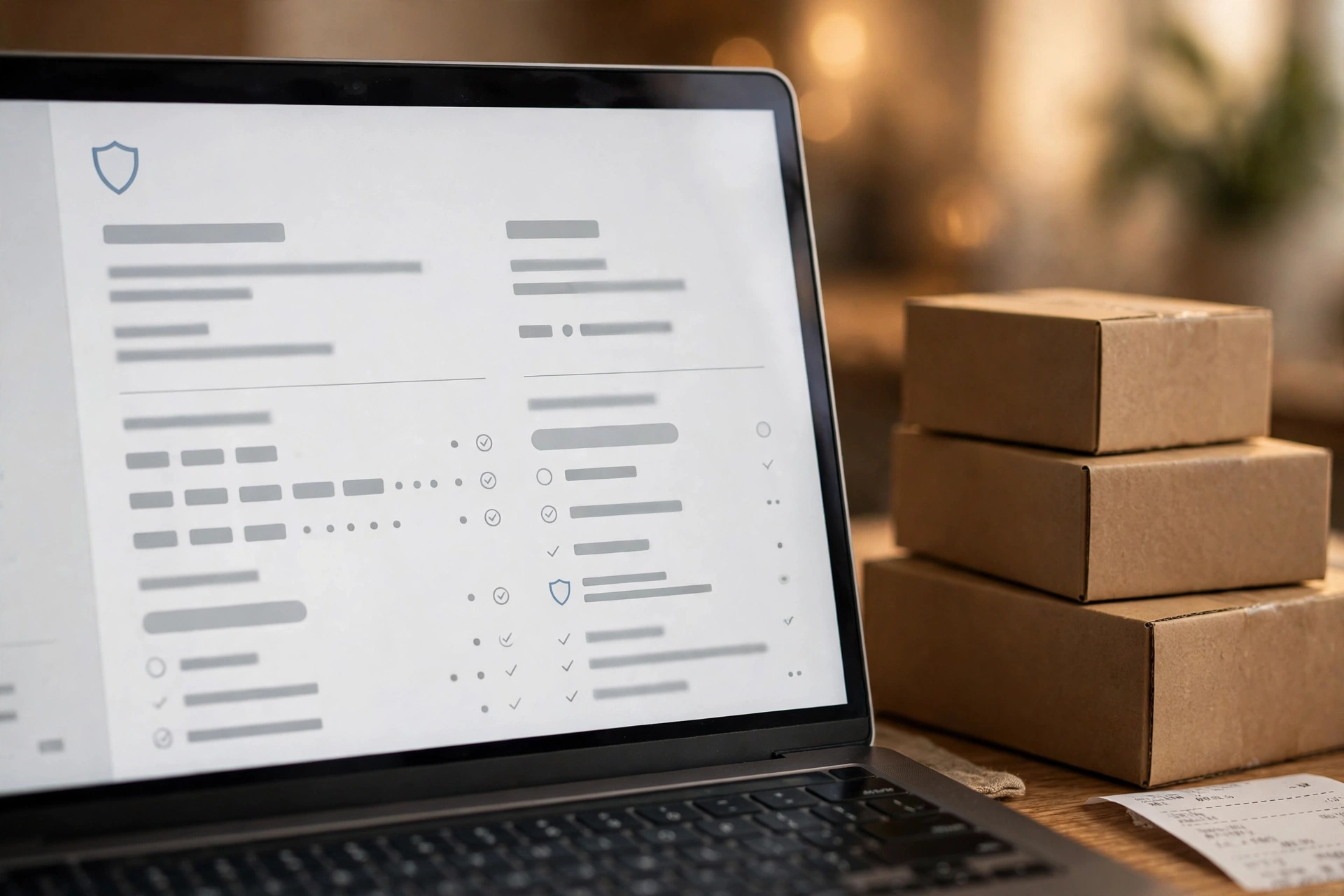
This deserves its own section because it's the load-bearing wall of the entire buyer experience, and it's the thing temp-mail users consistently underprice.
Think about what an eBay purchase actually is: a contract with a stranger, mediated by a platform, documented almost entirely in email. The order confirmation proves what you bought and for how much. The shipping notification proves when it left. The delivery confirmation proves where it landed. If the seller goes silent — and on a marketplace with millions of listings, some sellers go silent — your dispute case is built from those messages. eBay's guarantee process doesn't ask you to describe what happened from memory; it asks for the record.
A disposable inbox holds that record for a while and then deletes it on a schedule you don't control. The cruel timing of it: disputes surface weeks after purchase — exactly when the temp inbox has either expired or been recycled. Buying on eBay with temp mail is like signing a contract and handing the only copy to someone who shreds it in thirty days.
The same decay hits the quieter machinery. eBay sends security alerts — new-device sign-ins, password changes, suspicious activity — to your email. Watch lists, saved searches, and price-drop alerts live behind the account but route through email. Each of these is a small thing. Together they're the connective tissue of an account you actually use, and temp mail cuts every one of them.
Track two: the seller, where temp mail never had a chance
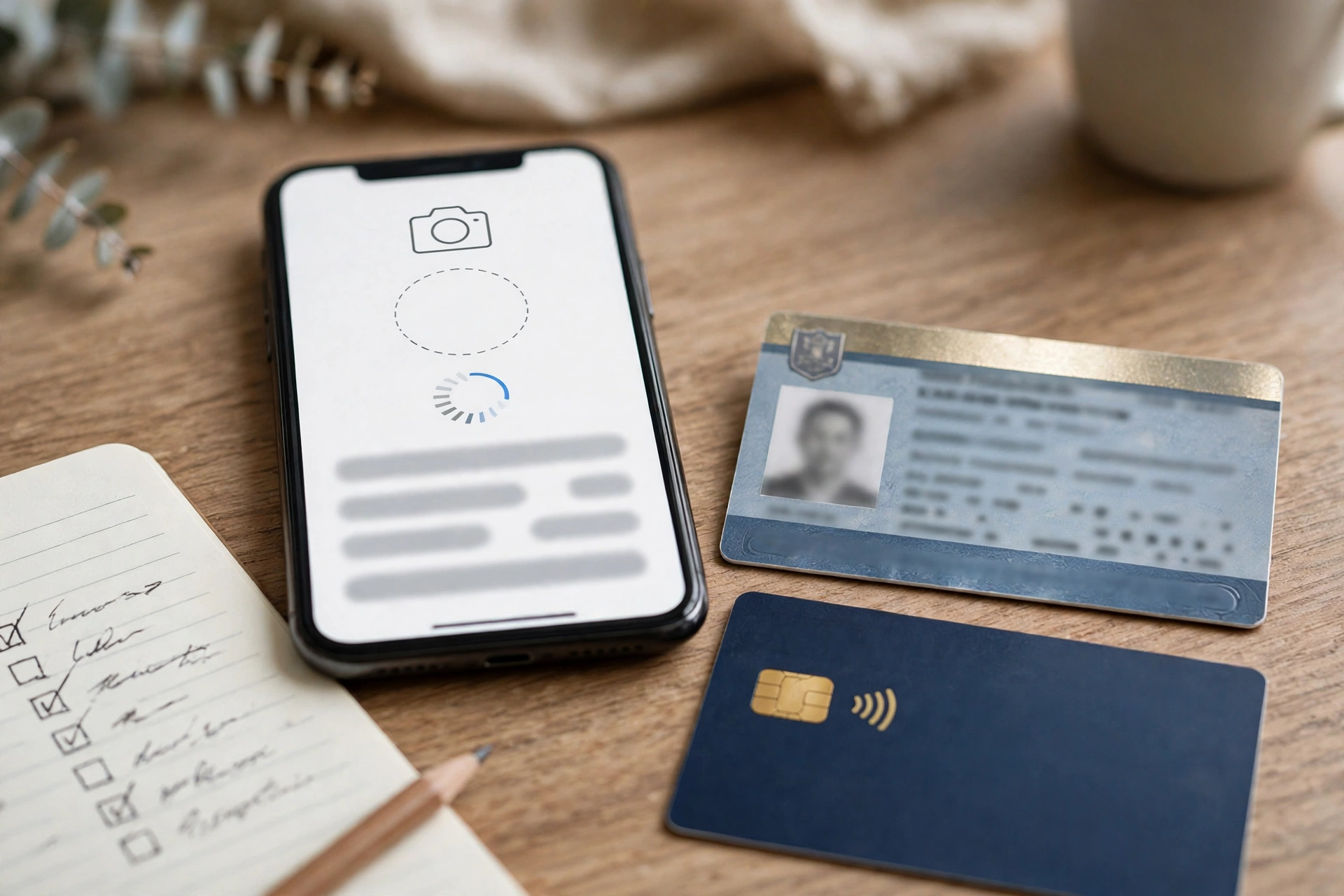
If the buyer track is a slow decay, the seller track is a wall. To sell on eBay, you register for managed payments — eBay's own payment processing, mandatory since the platform moved off PayPal years ago. And managed payments is not an email-gated feature. It's an identity-gated one.
eBay's own User Agreement spells it out: to keep listing and selling, you must provide the payments entity with identity information to meet compliance requirements — identity verification, anti-money-laundering controls, sanctions screening — pass that verification, and provide bank account information. In practice that means your legal name, your address, your Social Security number or business tax ID, a bank account in a matching name (verified with a micro-deposit test), and in many cases a government-issued ID. The name on the bank account has to match the name on the eBay account. Sellers who decline the registration get their listings restricted or ended.
Read that stack again and notice what's missing: at no point does the email address do any security work. It could be a temp address, your college address, or carrier pigeon — the bank account is the identity, the SSN is the identity, the ID is the identity. Temp mail "works" for the seller signup in the same way a paper umbrella works in a storm: technically present, functionally irrelevant.
There's a second, quieter seller-side trap that catches people who signed up as buyers first and list later. Sellers who start getting "invalid email" bounces or whose registration email becomes unreachable can see listings removed and accounts suspended — email health is an account-health signal on eBay. A seller running on a dead inbox is a seller eBay can't reach about policy violations, buyer disputes, or payout problems. The platform treats unreachability as risk, and it prices that risk against your account.
The multi-account fantasy that backfires
Here's the use case I hear most often, and it's the one with the sharpest teeth: "I'll use temp mail to run a second eBay account." The logic sounds airtight. eBay's multiple-account policy requires each account to have a unique email address, so a disposable address solves the email half cleanly. Some people want a separate buying account for embarrassing purchases; others want to keep feedback streams apart.
The problem is that the email was never the linkage eBay cares about. eBay connects accounts through billing details, bank accounts, IP addresses, device fingerprints, and shipping addresses. Accounts that look connected — same payment method, same address, same browsing patterns — get treated as connected, and restrictions on one can bleed into the others. Running two accounts on one bank account and one IP with two different temp emails doesn't give you two independent identities. It gives you one identity with two email addresses and twice the exposure.
This is the same linkage lesson that shows up across marketplaces — I covered the buyer-safety side of it in the Craigslist and Facebook Marketplace guide, where the safety rules are about the humans, not the email. On eBay the linkage is institutional: the platform itself ties your accounts together at the money layer, and no disposable email can cut that tie.
If you already signed up with temp mail: the ten-minute rescue
Plenty of people reading this already have the account — made it in a hurry, inbox long dead, maybe with purchases on it. Don't nuke the account. Rescue it. Ten minutes, in this order:
- Log in now, while you still can. If the password is saved in your browser, you're fine. If it's not, request the reset — and if the reset goes to the dead inbox, stop and contact eBay support directly rather than guessing.
- Swap the email for a permanent one. Account settings → Personal Information → Email. eBay sends a confirmation to the new address and a notice to the old one. Do this while you're logged in and the session is fresh; some account changes trigger re-verification, and re-verification to a dead inbox is a trap.
- Turn on 2-step verification. Phone or authenticator app — eBay supports both. This is the single highest-value change: it decouples your account's security from the email address entirely.
- Save your purchase history. Download or screenshot your order records for anything you might dispute later. Assume the old email copies are gone.
The broader principle here is the same one behind the free-trials honest rules: temp mail is for relationships you're willing to end. The moment an account holds money, history, or reputation, the relationship isn't disposable anymore — and the email shouldn't be either.
When temp mail genuinely makes sense on eBay
I'll give temp mail its due, because the honest answer isn't "never." There are three narrow cases where a disposable address is the right call on eBay:
Price research and auction watching. Tracking a dozen listings for a month to learn what a used lens actually sells for? A temp address for the watch alerts keeps your real inbox clean, and nothing of value accumulates on the account.
One-off seller contact. Asking a seller a question about an item you might buy. The conversation is short-lived by design.
Testing. Sellers testing their own listing notifications, or developers testing eBay-linked flows. Throwaway by definition.
Notice what these share: no money moves, no reputation accrues, no dispute can arise. The moment any of those three appear, you're back in permanent-email territory.
The verdict
eBay is the clearest illustration of a rule that applies across marketplaces: temp mail works best where the account is worthless, and eBay accounts become worth something fast. A buyer's feedback score, purchase history, and dispute rights all assume a reachable inbox. A seller's payouts assume a verified human. The signup form is the only place on eBay where the email is a formality, and it's the place temp-mail guides keep pointing at — because it's the only place their advice works.
Compare that to Amazon's reality, where the subscription and digital-content layers make the inbox load-bearing from day one, or Discord, where verification is easy and keeping the account is the hard part. eBay rhymes with both: easy in, expensive out. The difference is the money layer — on eBay, money changes hands between strangers, and every protection eBay sells you on is documented in an inbox you have to keep.
So: signing up for eBay with temp mail is allowed, it works, and for pure browsing it harms nothing. The honest version of the guide doesn't stop at "yes." It asks what the account will be worth in six months — and if the answer is anything at all, use an email you'll still own then.
Need a disposable temporary email?
Protect your real inbox from spam and promotional clutter instantly and free.
Received a suspicious email, text, or charge alert?
Verify whether the sender domain is disposable, spoofed, or unverified before clicking links.