

Temp Email for Black Friday 2026: Hunt the Deals, Burn the Spam After
Black Friday 2026 falls on Friday, November 27. If you wait until that morning to think about deals, you have already lost the part that matters most — and your inbox has already lost, too. The sale does not start on Friday anymore. It started weeks ago, in your email, and it will keep going long after the boxes arrive.
Here is the uncomfortable arithmetic. In 2025, according to figures reported from the National Retail Federation's Thanksgiving-weekend survey, 85.7 million Americans shopped online on Black Friday itself, and the average shopper spent $337.86 across the five-day weekend. Adobe put Black Friday online spending at $11.8 billion, up 9.1% on the year before. And email was not a side channel in that machine: for brands on Klaviyo's platform, email and SMS together drove 42% of revenue over the Black Friday–Cyber Monday period. Retailers do not send you deal emails out of generosity. Email is where the money is made.
That is why every "get 10% off your first order" pop-up, every "join for early access" banner, every "sign up for price-drop alerts" box deserves a second thought before your real address goes in. The discount is real. The subscription that comes with it is also real, and it lasts a lot longer than the sale. This post is the system I would actually use: how to catch the genuine Black Friday value — early-access codes, doorbuster alerts, price-drop notices — on disposable addresses, where the line sits between a deal worth chasing and an account that needs your real inbox, and how to shut the whole thing down cleanly on December 1.
Black Friday no longer happens on Friday
The first thing to accept is that the calendar has changed. A decade ago, Black Friday meant a queue outside a store at dawn. Now the "event" is a six-week season. Retailers drip early deals through October, run a pre-Black-Friday week, then Black Friday, then Small Business Saturday, then Cyber Monday, then a "Cyber Week" tail, then last-shipping-date panic deals, then after-Christmas clearance. One industry analysis of 2025 noted that brands in the Americas started mentioning Black Friday in email subject lines about 16 days ahead of the event — and that is only the subject-line mention, not the first deal email, which often lands far earlier.
This matters for your inbox because the season punishes a single-address strategy more than any other shopping event of the year. A normal purchase might add you to one list. A Black Friday season, shopped the usual way, adds you to a dozen: the electronics retailer, the department store, the beauty brand, the shoe site, the mattress company, the deal-aggregator newsletter, the cashback app, the price tracker, and every brand whose "extra 20% off" you claimed while half-asleep. Each of those lists has its own post-holiday program — the January clearance push, the Valentine's push, the spring sale — and none of them expires on its own.
The practical consequence is simple: do not shop Black Friday with your primary address as the default. Your primary address should be a scarce resource, spent only where a purchase, an account, or money genuinely depends on it. Everything else — the browsing-phase captures, the alert signups, the newsletter-for-a-code trades — goes on addresses you can retire. That is not paranoia. It is matching the lifespan of the address to the lifespan of the job, and no job in November lasts longer than a few weeks except the purchases themselves.
What retailers are really buying with a "10% off" signup
It helps to be blunt about the trade, because the pop-up is designed to hide it. When a retailer offers 10% off for your email, it is not buying your attention for one email. It is buying a durable, addressable relationship with a proven buyer, and it prices that relationship accordingly.
Think about what a Black Friday signup actually tells a retailer. The address itself is the key that joins together your browsing, your cart, your purchase history, and your future visits. The signup moment also reveals intent: you are shopping now, in the highest-intent weeks of the year, for a specific category. Retailers segment on exactly that — the TV buyer gets TV accessory emails for a year, the shoe buyer gets the new-drop emails, the person who claimed a code but never bought gets the win-back sequence. Klaviyo's 2025 finding that shoppers on both email and SMS placed more orders and added more items to cart than single-channel shoppers is, from the retailer's side, a reason to push you onto both channels at signup. From your side, it is a reason to decide deliberately which channel, if any, a given retailer earns.
None of this makes the 10% code a scam. Sometimes it is the best price you will get, and claiming it is perfectly rational. The mistake is paying for it with the wrong currency. A disposable address pays the same price — a working inbox where the code can arrive — without handing over the durable relationship. The retailer still gets a reachable customer for the transaction; you just do not fund their next eleven months of marketing with your primary inbox. That distinction is the whole game.
There is one honest exception, and it is worth naming early: loyalty programs and store credit cards. If the "signup" is actually a loyalty account that will hold points, rewards dollars, or a credit line, the address behind it needs to survive, because the value lives in the account. Use your real address there, eyes open, and treat the marketing email as the stated price of the rewards. Everything short of that — newsletter, alert, early-access list, one-time code — is disposable-address territory.
The three-bucket inbox system
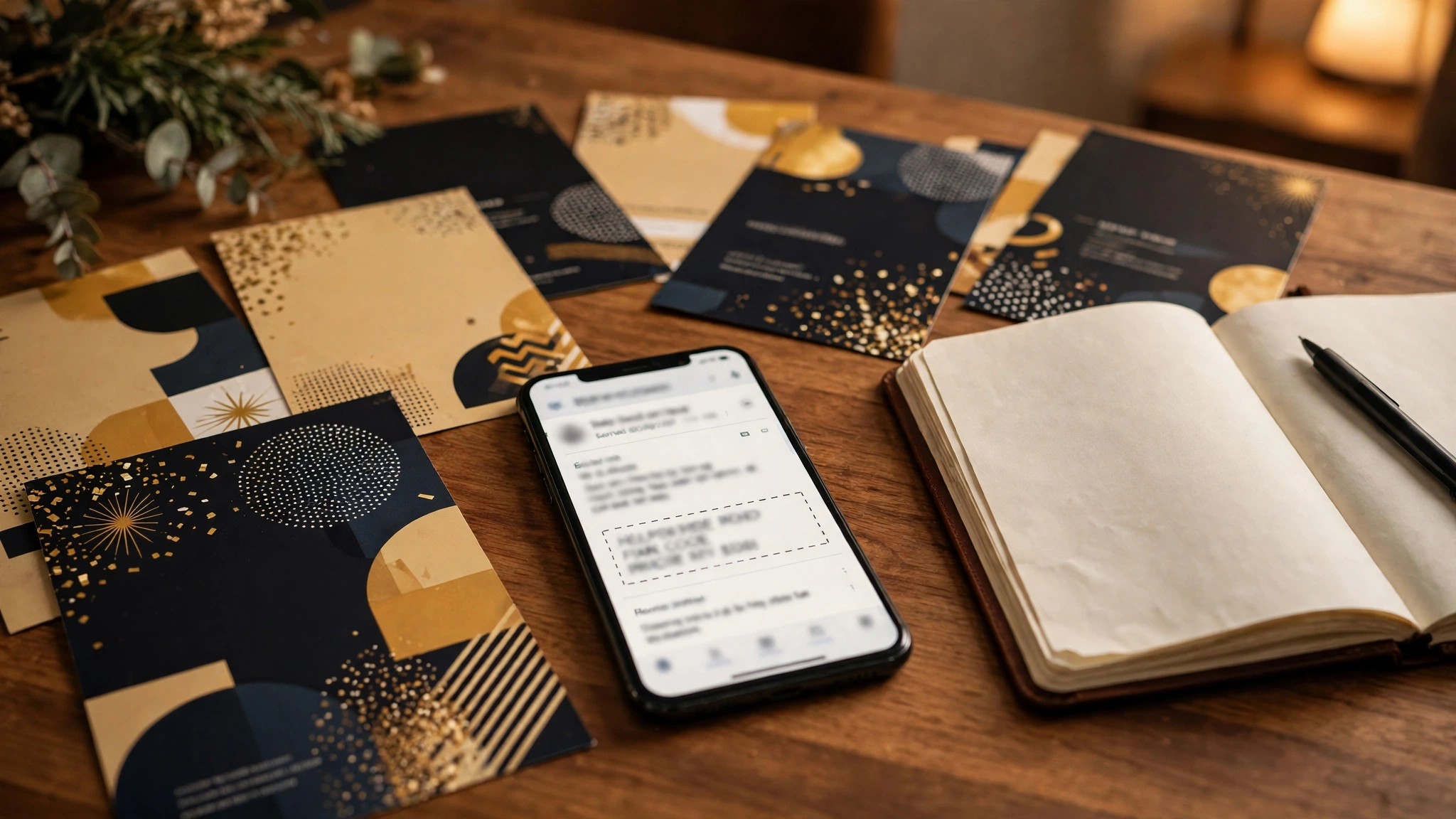
Most temp-mail advice stops at "use a disposable address," which is too vague to survive contact with a real Black Friday. You need a system, and the one that holds up is three buckets, each with a different lifespan and a different job.
Bucket one: the scout. One disposable address for deal discovery. This is where the deal-aggregator newsletters, the price-tracker alerts, the "Black Friday ad scan" sites, and the generic retailer newsletters go. The scout address exists to be noisy. You check it when you are hunting, ignore it when you are not, and you never buy anything from it directly. Its virtue is that it concentrates the noise in one place you can abandon, instead of letting it spread across your real inbox in a dozen separate subscriptions.
Bucket two: the buyer. One disposable address per big-ticket retailer, or per category if you are shopping widely. This is the address you give when a specific store offers a code, an early-access slot, or a doorbuster alert tied to that store. Keeping it per-retailer matters for a reason people miss: when the spam starts in January, you can tell which retailer sold, shared, or leaked your address, and retiring that one address kills that retailer's access without touching the others. If every store shares one burner address, you lose that diagnostic power and you have to burn everything at once.
Bucket three: the keeper. Your real address, reserved for completed purchases, accounts with stored value, warranties, and anything where you will need to prove who you are later. Order confirmations, shipping notices, return labels, refund confirmations, and price-match claims all live here. The keeper bucket should be boring. If it is exciting in November, something from bucket one or two leaked into it.
The discipline is in the boundaries, not the tool. A temp-mail service gives you the addresses in seconds; the system is what stops you from typing your real address into a pop-up at 11 p.m. because the code field is right there and you are in a hurry. My rule, and I recommend it without apology: if a form is offering a discount rather than completing a purchase, it gets a bucket-one or bucket-two address, every time, no exceptions for "just this once." The one time you break the rule is the subscription you will still be deleting in July.
Early access, doorbusters, and the account trap
This is where honest Black Friday advice has to get specific, because the "use temp mail for everything" version is wrong and will cost people real deals.
Early-access events are the clearest win for disposable addresses. Many retailers now run member or subscriber early access — a window, sometimes 24 to 48 hours before the public sale, where a code or a link unlocks the deal price. If that early access is delivered by email to anyone who signed up for the newsletter, a disposable address works perfectly: the code arrives, you use it, you check out with your real address on the order itself. The code was the product; the newsletter was the delivery van. You do not need to keep the van.
Doorbusters are trickier, and this is where people get burned. A doorbuster that requires an account — sign in, add to cart, check out inside the window — ties the deal to the account, not just the email. If the account was created with a disposable address that expires before you need to track the order, change the shipping address, or claim a price adjustment, you have built a trap for yourself. The same logic applies to app-only deals: if the deal lives inside an app account, the email behind that account needs to live at least as long as the order does.
Price-drop alerts sit in the middle, and the deciding question is always the same: does anything besides the alert depend on this address? A pure alert — "this TV dropped below $500" — is a perfect disposable-address job, and it is the same pattern that works for flight and hotel deal alerts, where the alert is a notification and the booking is a separate, real-address job. An alert tied to a wishlist, a cart, or a saved checkout is not pure, because the alert is attached to an account you may need again. For those, use a longer-lived disposable inbox and save the login details outside the inbox, or accept the real address and unsubscribe in December.
One more trap deserves its own paragraph: the checkout-time newsletter checkbox. You have done everything right — scout address for browsing, real address only for the order — and then the checkout page has a pre-ticked "send me deals" box, or a post-purchase "join our list for 15% off your next order" offer. That box is a bucket-one job wearing a checkout costume. Untick it, or if you genuinely want the next-order code, give it a disposable address at that moment rather than letting the order's address become a marketing address by default. The order confirmation needs your real address. The marketing list does not.
The scam filter: why a burner inbox is your best Black Friday security tool
There is a second, less discussed reason to run Black Friday on disposable addresses, and it may be the most valuable one: phishing defense.
Black Friday is the peak season for fake deal emails. The pattern is depressingly consistent every year: a convincing "your order has shipped" or "extra 40% off, today only" email, a link to a lookalike store, a checkout page that harvests card details. These emails work because in November your real inbox is already full of genuine retailer emails, so one more "deal" does not stand out. When every retailer's messages arrive on disposable addresses instead, the security logic flips: any Black Friday marketing email that lands in your real inbox is suspicious by definition, because you did not give retailers that address for marketing. The real inbox becomes a whitelist — order confirmations and account notices only — and anything else in it can be treated as phishing until proven otherwise.
The scout address doubles as a quarantine zone. Suspicious "deal" emails, coupon-code sites that demand an email before showing the code, and any retailer you have never heard of go there first. If the code works, you use it and move on. If the email turns out to be a phishing attempt, the damage is contained to an address you were going to retire anyway, and the attacker has nothing that leads to your accounts. That containment is worth more than any single discount.
A few concrete habits make this real. Never click a deal link from an email you were not expecting, even if the brand looks right — go to the retailer's site directly and search for the deal. Never enter card details on a page you reached from an email link during Black Friday week. And never, ever use the same address for deal hunting that you use for your bank, your password resets, or your primary shopping accounts. Compartmentalization is not just tidiness; it is the difference between one compromised list and a compromised identity.
Your week-by-week Black Friday inbox calendar

A system without dates is a wish. Here is the calendar, starting now.
Now through early November: set up the buckets. Create the scout address and the per-retailer buyer addresses before you need them, not during a flash sale. Sign up for the deal newsletters and price alerts you actually want — and be selective. Five good alert sources beat twenty noisy ones, because an inbox you never read is just a list you forgot you joined. This is also the moment to decide, retailer by retailer, which loyalty programs genuinely earn your real address. If you cannot name the reward you expect from a program, it does not earn it.
Mid-November: early-access week. This is when the early-access codes start landing. Check the scout and buyer inboxes daily, not your real inbox — the codes are there. Save any code you intend to use outside the inbox (a note, a screenshot), because inbox expiry should never be the reason a code dies. If a code requires an account, create that account now, while you are calm, and record the login somewhere safe.
Black Friday week, November 23–30: buy on the keeper address, hunt on the rest. Orders, shipping, and returns go to the real address. Everything else — last-minute codes, doorbuster alerts, "extra 10% today only" pushes — stays on the disposable addresses. When you check out, untick the marketing box. When a site offers a post-purchase signup code, use a buyer address. The week is chaotic by design; the buckets are what keep the chaos from following you home.
Cyber Monday, November 30: the second wave, same rules. Cyber Monday is not a separate event with separate rules. It is the same retailers, the same lists, and often the same codes with a new subject line. Do not let "one more day" become the excuse to hand your real address to five more stores. The system does not take a day off because the sale has a new name.
December 1: the burn-down. This is the step everyone skips, and it is the step that makes the whole system pay off. On December 1, do three things. First, confirm that every order you care about — confirmations, tracking, return windows — is on your real address and saved outside any disposable inbox. Second, unsubscribe or simply retire the scout address and every buyer address you no longer need; retiring the address is faster and more complete than unsubscribing from each list one by one, and it is the same clean-exit logic that works for free-trial signups. Third, review your real inbox for any retailer marketing that slipped through during the chaos, and unsubscribe from those individually — those are the leaks worth plugging, because they are the only ones that can reach you next year.
What I would not do
Honesty requires the other side of the ledger, so here it is, plainly.
I would not use a disposable address for anything with stored money: gift-card balances, store credit, rewards points, or a wallet inside a retailer app. If the value lives in the account, the address behind the account must live too. I would not use one for a purchase you might need to return in January, because return labels, refund confirmations, and "we need to verify your identity" emails all go to the order address, and a dead inbox turns a simple return into a customer-service argument. I would not use a public, no-password disposable inbox for any order or account — an address anyone can guess and read is not a privacy tool, it is a leak, and order details contain your name, address, and purchase history. And I would not use temp mail to create multiple accounts to abuse a one-per-customer deal limit. That is not privacy; that is fraud against the retailer's terms, and it is the kind of conduct that gets accounts — and sometimes payment methods — banned. The line, as always, is conduct: using a working disposable address to receive marketing you consented to receive is ordinary privacy practice, and we have covered the legal picture in detail. Gaming a system is a different matter.
The through-line of all of this is unglamorous, and that is the point. Black Friday rewards the shopper who decides, before the season starts, which inboxes do which jobs — and then actually sticks to it when the pop-ups start flashing. The deals are real, and some of them are genuinely good. They just are not worth a year of your primary inbox. Set up the buckets now, hunt on the disposable addresses, buy on the real one, and on December 1, burn the rest down. The television will be forgotten in three years. Your inbox does not have to remember the season that bought it.
FAQ
Can I use a temp email for Black Friday early-access codes? Yes, when early access is delivered by email to newsletter subscribers. The code arrives in the disposable inbox, you use it at checkout with your real address on the order, and the newsletter subscription dies when you retire the address. If early access requires a logged-in account, keep the account's address alive until the order is complete.
Will retailers block disposable email addresses at signup? Some do. Major retailers and their email platforms increasingly run disposable-domain blocklists, and a blocked signup usually fails silently — no code, no confirmation. If one disposable domain is blocked, try another once; if the retailer blocks temp mail as policy, use a dedicated secondary address for that store rather than your primary.
Should I check out with the same temp address I used for the discount code? No. This is the central rule of the whole system. The code address did its job when it delivered the discount. The order — confirmation, shipping, returns, refunds — goes on your real address, where you can still reach it in January.
What about price-drop alerts for a specific product I am watching? Pure alerts are an ideal disposable-address job: the alert is a notification, nothing else depends on the address, and you buy separately with your real address when the price hits your target. Alerts tied to a wishlist or saved cart need an address that lives as long as the account matters.
Is it safe to use temp mail for Black Friday shopping? For deal hunting, yes — and it improves your security, because it keeps marketing out of your real inbox and quarantines phishing attempts on an address you can retire. For orders, accounts with stored value, and returns, use your real address. Never use a public no-password inbox for anything containing order or personal details.
When should I retire my Black Friday addresses? December 1, after confirming that every order confirmation, tracking number, and return window you need is saved on your real address. Retiring the address kills every marketing list attached to it at once, which is faster and more complete than unsubscribing one list at a time.
Need a disposable temporary email?
Protect your real inbox from spam and promotional clutter instantly and free.
Received a suspicious email, text, or charge alert?
Verify whether the sender domain is disposable, spoofed, or unverified before clicking links.