
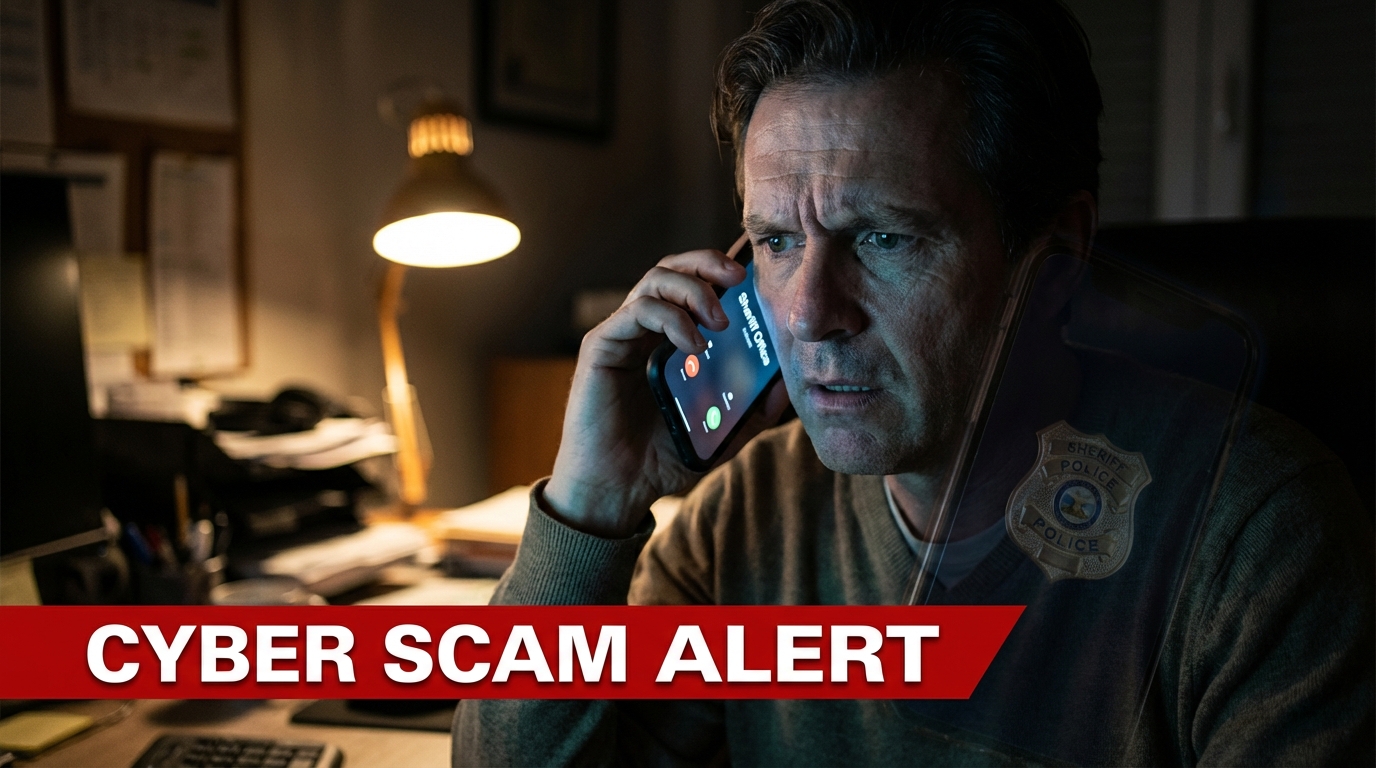
Missed Jury Duty? That Phone Call Is a Scam — Here’s How They Trick You

Missed Jury Duty? That Call Isn’t What You Think
The call usually comes out of nowhere.
A serious voice on the other end tells you that you missed jury duty. There’s already a warrant. And unless you act immediately, you could be arrested.
For a moment, it feels real. The tone is confident. The details sound official. Some callers even use the names of real officers or courts.
That’s exactly why this scam keeps working.
Here’s What’s Actually Happening
There is no warrant.
No officer is being sent.
And no court is trying to collect money from you over the phone.
What you’re dealing with is a well-rehearsed scam that’s been circulating across the U.S., hitting thousands of people every year. The script is simple: create urgency, apply pressure, and don’t give you time to think.
Once fear kicks in, people stop questioning things.
Why It Feels So Convincing
Most people don’t know what happens if they miss jury duty. That uncertainty is what scammers rely on.
They fill the gap with authority.
They might say they’re from the sheriff’s office. Or a U.S. Marshal. Sometimes they even spoof the caller ID so your phone shows a real government number.
By the time you realize something feels off, they’ve already pushed you into a corner.
The Moment the Scam Becomes Obvious
It always comes down to money.
You’ll be told there’s a way to “resolve” the issue immediately — usually by paying a fine or bond.
But the payment methods tell the real story.
Gift cards. Cryptocurrency. Wire transfers.
No legitimate court in the U.S. operates like that. Ever.
What Real Courts Actually Do
If you miss jury duty, you don’t get a threatening phone call.
You get mail.
Official communication comes through documented channels, and you’re given time to respond. If there’s any issue, it’s handled through proper legal procedures — not rushed payments over a phone call.
There’s no scenario where a real officer keeps you on the line while asking you to buy gift cards.
Why These Calls Keep Coming Back
Your number doesn’t have to be “targeted.”
It just has to exist on the wrong list.
These lists come from data leaks, public directories, and online signups. Once your number is out there, it gets reused again and again across different scam campaigns.
That’s why people in completely different states report the same call with almost identical wording.
What You Should Do If You Get One
The simplest response is also the most effective.
Hang up.
Don’t argue. Don’t try to prove anything. Don’t stay on the call longer than necessary.
If you’re still unsure afterward, look up your local court’s official number and call them directly. Not the number the caller gives you — the one listed on an official site.
If You Already Engaged With Them
Act quickly.
If any payment was made, contact your bank or provider immediately. If personal details were shared, monitor your accounts and take steps to secure them.
You can also report the incident to the Federal Trade Commission so it’s tracked properly.
The Only Thing This Scam Depends On
Speed.
They need you to react before you think.
Because the moment you slow down and question it, the entire story falls apart.
How to Check If You Actually Missed Jury Duty

If the call rattles you, verify it through a channel the caller does not control. Find your court's official website — a .gov address, not a number the caller gave you — and call the clerk's office on the number listed there. Ask whether you have a summons outstanding. Real courts communicate about jury duty by mail: a summons arrives as a letter, with time to respond, and any problem is handled through documented procedures, not a phone call demanding immediate payment. If the court has no record of you, the call was a scam, and you can hang up without another thought.
The Payment Methods That Give It Away
The moment the caller names a payment method, the scam is confirmed. Gift cards, cryptocurrency, wire transfers, and payment apps are the tell: no legitimate court in the United States collects fines or bonds over the phone, and no court asks you to pay with a gift card. Real court payments go through official channels — the clerk's office, the court website, or in person — with receipts and records. A caller who needs the money right now, through a method that cannot be reversed, is not an officer. He is a scammer running a script, and the script only works if you stay on the line.
Final Word
No real court demands instant payment over a phone call.
No real officer asks for gift cards.
And no legal problem gets solved by staying on the line with a stranger.
If you remember that, this scam has no power over you.
Need a disposable temporary email?
Protect your real inbox from spam and promotional clutter instantly and free.
Received a suspicious email, text, or charge alert?
Verify whether the sender domain is disposable, spoofed, or unverified before clicking links.